WELCOME TO VISIT OUR WEBSITE
English

Views: 0 Author: Site Editor Publish Time: 2026-02-02 Origin: Site


For decades, the waffle knit was hidden away. It existed almost exclusively as "thermal underwear," a purely utilitarian layer worn by grandfathers and outdoorsmen to survive harsh winters. It was never meant to be seen. That narrative has shifted entirely. Today, the waffle knit has evolved into a standalone fashion staple, appearing in everything from rugged Henleys to refined crewnecks. But its rise in popularity is not just about a rugged aesthetic.
The true value of this garment lies in a unique engineering paradox. Waffle Fabric possesses the rare ability to be simultaneously insulating and breathable. This dual nature is something standard jersey knits simply cannot replicate. While a flat cotton tee sticks to the skin and a heavy fleece traps too much heat, the waffle structure offers a functional middle ground.
This guide moves beyond the surface-level look. We are here to analyze the functional performance, durability, and total cost of ownership of these garments. You will learn the specific evaluation criteria—from GSM weight to fiber blends—needed to identify high-quality waffle shirts that upgrade your wardrobe’s utility.
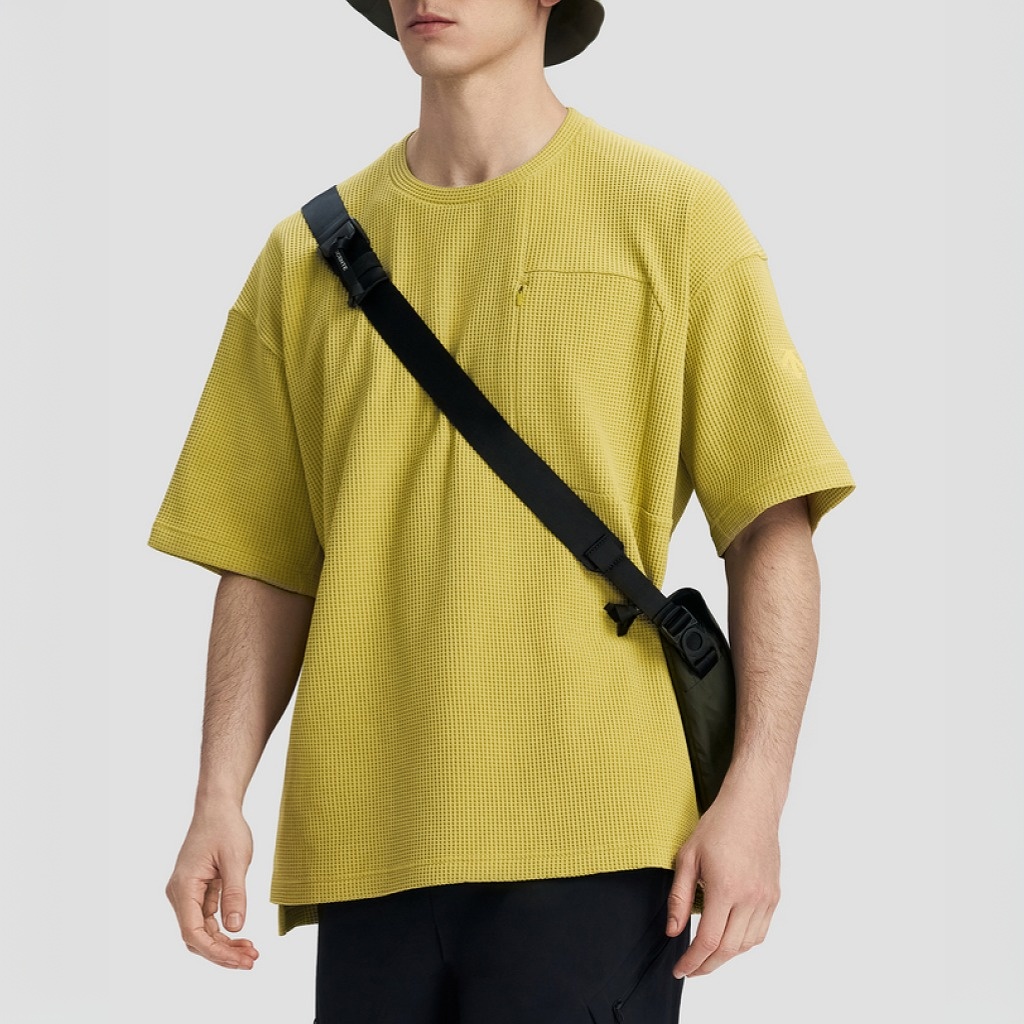
Thermal Regulation: The 3D honeycomb structure creates "dead air space" for insulation without heavy bulk.
Moisture Management: Increased surface area allows waffle-knit tees to wick moisture faster than flat weaves.
Durability Factors: High-quality waffle knits resist pilling better than jersey but require specific care to manage shrinkage (up to 10% in untreated cotton).
Versatility ROI: Functions effectively as both a base layer (winter) and a standalone breathable top (summer), maximizing wardrobe utility.
To understand why these shirts work, you must look at the physics of the fabric itself. The defining feature of any waffle knit is its grid-like series of raised ridges and recessed squares. This is not just for texture; it is a deliberate thermal engine.
The magic happens in the depressions. These tiny pockets trap a layer of air directly against your skin. In thermodynamics, this is known as "dead air space." Stationary air is an excellent insulator because it prevents body heat from escaping through convection. Essentially, the fabric creates a micro-climate of warmth around your torso. Unlike a flat weave that sits flush against the skin, the waffle structure maintains this insulating buffer constantly.
When you compare waffle shirts to standard sweatshirts or fleece, the efficiency becomes clear. A waffle knit provides substantial insulation without the heavy "bulk" associated with traditional winter gear. You get the warmth of a heavier garment with the physical weight of a lightweight top.
This high warmth-to-weight ratio prevents the restriction of movement. It makes the waffle knit ideal for layering. You can easily slide a flannel or a denim jacket over it without feeling stuffed or immobile. It occupies the "Goldilocks" zone of thermal layering.
This engineering shines brightest during transition months. In the fall or spring, a heavy parka is overkill, yet a standard t-shirt leaves you shivering. The thermal regulation of a waffle knit handles these fluctuations perfectly. It retains just enough heat to keep you comfortable in a breeze but breathes enough to prevent overheating when the sun comes out.
It seems counterintuitive to wear a "thermal" texture in warm weather. However, the same physics that trap heat also facilitate cooling when worn as a standalone layer. This is the summer use case that many buyers overlook.
Evaporation relies on surface area. The 3D geometry of the fabric—its peaks and valleys—significantly increases the total surface area compared to a flat weave of the same size. There is simply more fabric exposed to the air.
This increased exposure impacts moisture management. When you sweat, the fabric wicks moisture away from the skin. Because the surface area is larger, the rate of evaporation accelerates. Waffle-Knit Tee designs utilize this to keep the wearer dry, acting almost like a primitive performance fabric before the invention of synthetic sportswear.
There is a distinct difference between insulation and suffocation. Fleece creates a barrier that traps heat aggressively. Waffle knits are woven to allow air permeation. The structure is inherently porous.
For quality knits, breathability metrics often fall in the range of 10,000–15,000 g/m²/day. This data point quantifies airflow, proving that while the fabric holds heat, it cycles air through the weave. This prevents the "greenhouse effect" inside your shirt.
Anyone who has worn a cheap cotton t-shirt in high humidity knows the discomfort of "wet cling." The fabric gets damp and pastes itself to your back. Waffle knits solve this physically. Because only the raised grid touches your skin, the recessed squares float above it. This creates a physical separation layer. Even if you perspire, the shirt sits off the skin, maintaining airflow and preventing that suffocating, sticky sensation.
Functionality drives the purchase, but durability ensures the return on investment (ROI). Waffle knits offer structural advantages that extend the garment's lifespan compared to standard jersey basics.
Visually, flat tees can look two-dimensional and plain. The 3D texture of a waffle knit adds "visual weight" to an outfit. It creates shadows and highlights within the fabric itself. This allows the garment to stand alone without relying on loud prints, logos, or graphics.
Stylists often refer to a Waffle-Knit Tee as an "Elevated Basic." It signals intention. Wearing one looks more structured and put-together than wearing a plain undershirt, even though the effort required is identical.
Flat knits show every flaw. A small amount of friction leads to pilling that is immediately visible. The complex surface of waffle fabric hides minor wear and tear effectively. The valleys of the grid protect the fabric integrity, meaning the shirt looks newer for longer.
Furthermore, the knit structure provides "mechanical stretch." Even without synthetic elastic like Spandex, the grid acts like an accordion. It expands and contracts with your movement. This reduces stress on the seams and prevents the fabric from tearing under tension.
We must acknowledge a common criticism. Low-quality waffle knits are notorious for "bagging out." This usually happens at the elbows or knees (in bottoms) where the fabric stretches but fails to snap back. This is a sign of poor tension during manufacturing.
The solution lies in material selection. High-quality blends or tighter knit gauges mitigate this risk significantly. When evaluating a shirt, pull the fabric gently. If it doesn't immediately snap back to its original shape, it will likely bag out after a few wears.
The raw material dictates the performance. While the waffle weave provides the structure, the fiber determines how it handles moisture, heat, and longevity. Use the comparison below to choose the right fabric for your needs.
| Material Type | Primary Benefit | Potential Drawback | Best Use Case |
|---|---|---|---|
| 100% Cotton | Maximum breathability & soft hand-feel. Hypoallergenic. | High shrinkage risk (up to 15%). Slow drying time if soaked. | Lounging, casual office wear, dry climates. |
| Poly/Cotton Blend | Durability, color retention, and shape memory (recovery). | Can retain odors. Less breathable if polyester >40%. | Active use, layering, longevity-focused wardrobes. |
| Merino/Linen | Superior temp regulation & anti-microbial. | High cost. Requires delicate care. | Travel gear, luxury loungewear. |
Cotton remains the gold standard for comfort. It is soft against the skin and hypoallergenic. However, cotton fibers soak up water and swell. If you choose 100% cotton, you must be vigilant about laundry care, as these items are prone to significant shrinkage.
Adding polyester changes the game. It reinforces the cotton fibers, preventing the sagging or bagging mentioned earlier. A 60/40 cotton-poly blend is often the sweet spot. It retains the softness of cotton but gains the durability and colorfastness of synthetics.
For those willing to invest, natural performance fibers like Merino wool or linen offer the best of both worlds. They wick moisture aggressively and resist odors naturally. These are rare but serve as excellent travel companions where washing facilities are limited.
Not all grids are created equal. When shopping, you need to look at specific technical details to ensure you aren't buying a disposable garment.
The weight of the fabric, measured in Grams per Square Meter (GSM), tells you exactly how the shirt will perform. Do not rely on photos alone.
Lightweight (Under 200 GSM / 4-6 oz): These often feature "Mini Waffle" textures. They are best for summer wear or layering under tight sweaters. Be warned: they can be sheer or see-through in white.
Mid-Weight (200-300 GSM): This is the "Goldilocks" zone. These shirts have enough structure to drape well without clinging. They act as perfect standalone Henleys.
Heavyweight (>300 GSM / 12oz+): These are essentially sweater replacements. They are strictly for cold weather and may be too warm for indoor use.
Because Waffle Fabric is heavy and stretchy, construction matters. Check the necklines first. The collar should have reinforced ribbing containing elastane. Without this, the heavy fabric will pull the neck open, leading to a sloppy, stretched-out look.
Look for flatlock stitching on the seams. Waffle knit is naturally thicker than jersey. Standard raised seams can feel bulky and chafe against the skin. Flatlock seams lay flush, reducing bulk and increasing comfort.
This is the most critical evaluation point. You must check if the garment is labeled "Pre-Shrunk" or "Garment Dyed." If it is not, you must expect reality: untreated cotton waffle items can shrink 10-15% in length and width. If you are between sizes and the shirt is raw cotton, always size up.
You can ruin a high-quality waffle shirt in a single laundry cycle. The unique 3D structure requires specific handling to maintain its dimensions.
Cold water wash is non-negotiable. Hot water relaxes the tension in the fibers too aggressively, leading to distortion. Furthermore, avoid heavy agitation settings. The raised texture of the grid can snag on zippers or buttons from other clothes. Wash these shirts with similar fabrics or inside out.
Air drying is preferred to prevent vertical shrinkage. If you must use a dryer, use low heat. High heat is the enemy of the 3D texture; it can flatten the grid, which effectively destroys the thermal benefits you paid for. Avoid ironing. If you have wrinkles, use a steamer. The steam relaxes the fibers without crushing the honeycomb structure.
Never hang a waffle knit. The weight of the fabric, combined with the loose knit structure, fights a losing battle against gravity. Over time, hangers will create "nipples" in the shoulders and stretch the garment vertically, making it look like a dress. Always fold these shirts to preserve their shape.
Waffle shirts are more than just a stylistic nod to vintage workwear. They offer a tangible functional advantage—thermal regulation paired with moisture wicking—masked as a simple fashion choice. They solve the problem of transitional weather and provide texture to otherwise flat outfits.
To make the right decision, follow this framework:
Choose 100% Cotton if your priority is lounging comfort and you can commit to careful air-drying.
Choose Blends if you need a shirt for active use that retains its shape day after day.
Choose Heavyweight (>300 GSM) if you need a winter insulation layer to replace bulky sweaters.
It is time to audit your "basics" rotation. Replace your flat jersey knits with waffle textures where you need better multi-season utility. The investment in texture pays dividends in comfort.
A: Yes, significantly. Because the waffle structure is a loose knit, the fibers have room to contract. Expect 10-15% shrinkage on 100% cotton items that are not pre-shrunk. To minimize this, always wash in cold water and air dry. If you plan to machine dry the garment, we strongly advise buying one size larger than your standard fit.
A: Yes. The 3D grid structure captures body heat in "dead air" pockets against the skin, acting as an insulator. A regular t-shirt sits flat and allows heat to escape via conduction. A mid-weight waffle shirt can provide warmth comparable to a light sweatshirt while remaining breathable.
A: They often share the same fabric, but the cut differs. "Thermal underwear" refers to a tight-fitting base layer meant to be worn under clothes. Modern "waffle shirts" or Henleys use the same insulating Waffle Fabric but are cut with a looser, fashion-forward fit intended to be worn as a standalone outer layer.
A: Yes, provided you choose a lightweight or "Mini Waffle" gauge (under 200 GSM). The textured surface increases the fabric's total surface area, which helps wick sweat and evaporate moisture faster than flat cotton. The grid also prevents the wet fabric from clinging to your skin in humid conditions.
A: The most common cause of stretching is hanging the garment. Gravity pulls the heavy knit downward, distorting the shoulders and length. Always fold your waffle shirts. Additionally, avoid washing them in hot water, which damages the fiber's elasticity. If bagging occurs during wear, washing and drying (carefully) can often reset the shape.


