WELCOME TO VISIT OUR WEBSITE
English

Views: 0 Author: Site Editor Publish Time: 2026-06-06 Origin: Site


Securing the right women’s sports bra represents an anatomical necessity, rather than a purely aesthetic choice. When you exercise without proper structural support, athletic performance naturally degrades. Worse, you expose vulnerable tissues to permanent damage. Breasts entirely lack muscle tissue to support themselves during vigorous movement. If you rely on inadequate gear, you risk irreversible strain to vital connective tissues, leading to premature sagging and acute pain. This guide provides an evidence-based framework for evaluating a workout bra based on biomechanics, activity-specific impact, and personalized fit testing. We will explore how different physical activities demand highly specialized garment features. By the end of this article, you will learn how to match bra architecture directly to your specific body type. You will also discover how to objectively test support mechanics in the fitting room before you ever decide to remove the tags.
Support Originates Below: The underband, not the shoulder straps, must carry the majority of the weight to prevent neck and shoulder strain.
Match Construction to Impact: Choose compression for low-impact mobility (yoga) and encapsulation for high-impact control (running).
Asymmetry is Standard: With 97% of women experiencing breast asymmetry, independently adjustable straps are a non-negotiable feature for a balanced fit.
Finite Lifespan: Technical elasticity degrades; a sports bra requires replacement after 30 to 40 wash cycles to maintain stated support levels.
Understanding human anatomy fundamentally changes how we view athletic apparel. During running or high-intensity exercise, unsupported breasts do not simply bounce up and down. They move in a complex, three-dimensional "figure-8" trajectory. Scientific studies show this kinetic displacement can reach up to 8 inches during explosive athletic movements. You cannot control this chaotic motion using standard clothing.
This extreme movement presents a serious anatomical risk. Breasts completely lack internal muscle tissue. They rely entirely on surrounding skin and delicate connective bands known as Cooper’s ligaments. High-velocity transverse and vertical forces place irreversible strain on these specific ligaments. Over time, this repeated mechanical stress leads to premature tissue sagging and acute localized pain.
Standard activewear tops consistently fail to protect against these multi-directional forces. Typical gym designs only offer light vertical restriction. They completely fail to mitigate transverse or side-to-side mechanical loads. When you perform rapid lateral movements, you need engineered stability. Basic tops stretch out quickly and leave your chest vulnerable. To protect your anatomy safely, you must transition from basic coverage layers to structural performance gear.
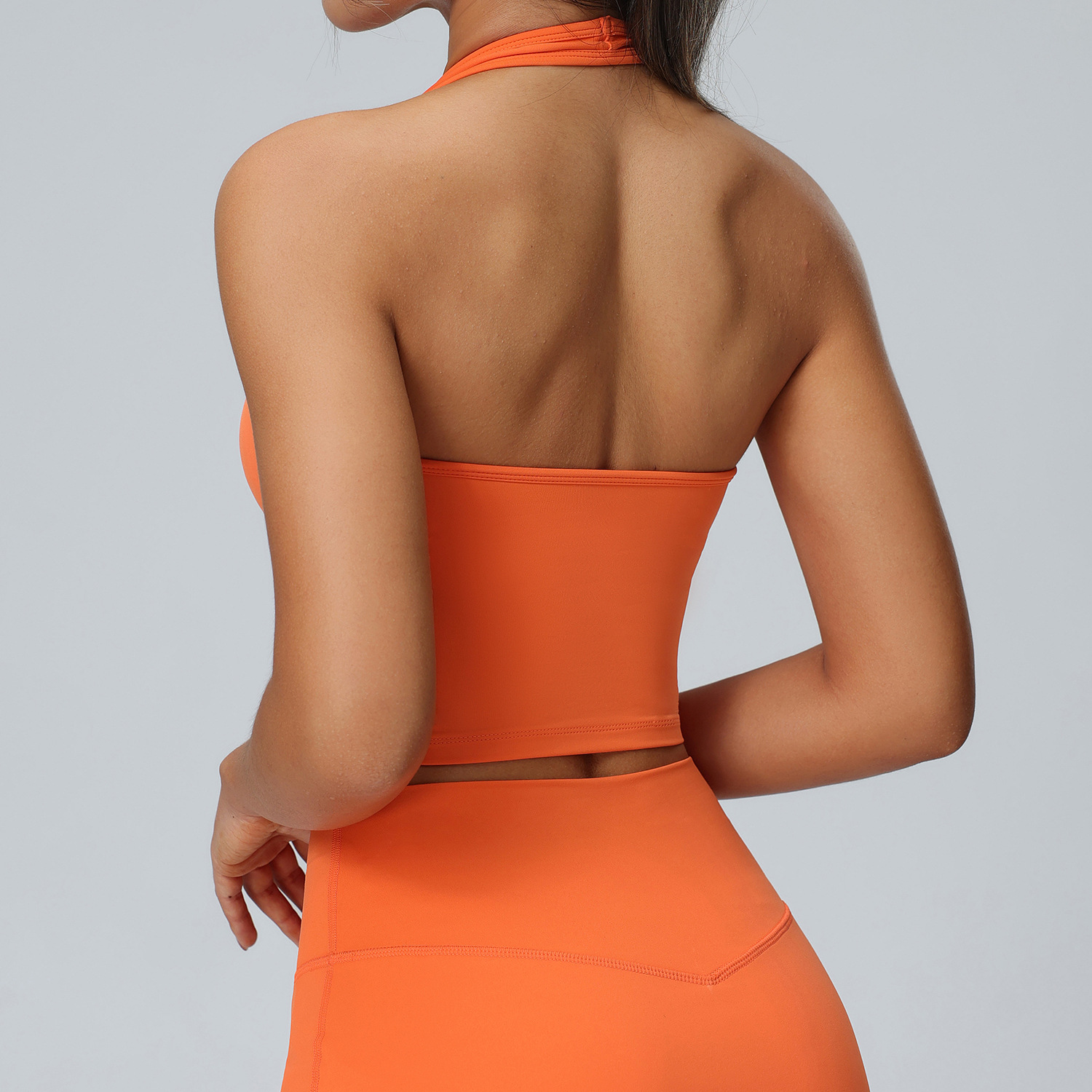
Manufacturers build athletic undergarments using specific structural frameworks. Understanding internal architecture remains crucial for selecting the right gear. Let us explore how these three primary design approaches differ and why they matter.
Compression designs utilize a pull-over, hardware-free, and wire-free construction. They secure breast tissue by pressing it firmly against your chest wall. They work incredibly well for A to C cups engaging in low-to-medium impact activities. However, compression has distinct physical limitations. It often causes a "uniboob" effect by smashing tissue together. It heavily restricts independent movement. During intense cardio sessions, this tight fabric overlap traps excessive heat and causes severe chafing.
Encapsulation mimics everyday lingerie but engineers it for extreme physical stress. These designs feature individual molded cups, structured underbands, and adjustable hook-and-eye closures. They represent the industry standard for D+ cups and high-impact activities. Encapsulation isolates movement per breast. This distinct separation reduces momentum and friction while providing superior airflow between the breasts.
Hybrid models seamlessly merge the best traits of both systems. They feature inner encapsulation cups layered beneath a firm outer compression overlay. We strongly recommend hybrid designs for maximum support requirements across all sizes. They deliver rigorous bounce control while maintaining a smooth external silhouette.
Architecture Feature Comparison Chart | |||
Architecture Type | Design Approach | Ideal Cup Size | Primary Benefit |
|---|---|---|---|
Compression | Pulls tissue against chest wall | A - C Cups | Hardware-free comfort |
Encapsulation | Individual molded supportive cups | D+ Cups | Isolates movement, reduces heat |
Hybrid | Inner cups + outer compression | All Sizes | Maximum multidirectional control |
Your daily workout explicitly dictates your required support level. A high-intensity track sprint demands vastly different mechanics than a gentle studio stretching routine. You must precisely align your Sports Bra features with your primary activity. Buying excessive support for a low-impact class often restricts breathing unnecessarily.
Floor workouts demand absolute flexibility over rigid motion control. You need garments built for deep breathing and torso twisting.
Key Criteria: Four-way stretch and multi-directional mobility.
Feature Focus: Look for seamless construction to prevent chafing during mat work. The fabric should function as a weightless "second skin" that never pinches or binds your ribcage.
Cross-training involves multidirectional jumping, heavy lifting, and rapid pacing. You need versatile gear managing sudden physical transitions.
Key Criteria: Shape durability and explosive movement containment.
Feature Focus: Seek out firm underbands and wide, padded straps. Scientific testing shows doubling strap width reduces shoulder pressure far more effectively than merely adding foam thickness. Wide straps disperse weight evenly across your clavicle.
Distance running generates immense, repetitive vertical shockwaves. Your body requires maximum kinetic suppression.
Key Criteria: Continuous impact suppression and advanced thermal regulation.
Feature Focus: Prioritize encapsulation designs. Ensure they include strategic mesh paneling for rapid heat dumping. Flat-lock seams are strictly necessary to eliminate high-frequency friction wounds on your ribs.
Finding your perfect fit goes beyond merely matching cup and band measurements. You must objectively test the garment's structural integrity before buying. We developed a highly effective 4-point framework for this exact purpose. Use these steps every time you enter a fitting room.
The 5cm Band Rule: The underband supplies your primary structural support. Fasten the garment securely and pull the bottom band directly away from your body. It should never stretch further than 5 centimeters (about 2 inches). If it yields more than this, the core support anchor remains critically compromised.
The Center Gore Test: Inspect the fabric bridging the cups at your front-center chest. This section must lay completely flat against your sternum. If it aggressively floats away from your body, the cup is too small or the band is too loose.
Adjustability Check: Human anatomy rarely achieves perfect symmetry. In fact, 97% of women possess natural breast asymmetry. Fixed-strap designs inherently cause unilateral shoulder strain because they cannot accommodate this bodily imbalance. Always verify you can independently tension the left and right straps.
The Bounce Test (Motion Control): Never evaluate athletic gear while standing completely still. Perform a brief set of burpees, high knees, or jumping jacks right in the fitting room. The garment should feel appropriately restrictive. However, it must never inhibit your ability to execute deep lung expansion.
Athletes with larger busts or those recovering from surgical procedures face incredibly unique engineering challenges. Standard athletic apparel often ignores these highly specific requirements. Fortunately, advanced textile engineering now offers targeted solutions.
Many women firmly believe heavy support mandates metal hardware. We need to debunk the wire myth permanently. High-impact containment no longer strictly requires underwires. Modern molded compression bands successfully replace rigid wires. They provide robust stability without painfully digging into your sensitive ribcage. When evaluating these advanced garments, pay close attention to extra features. Ensure pocket features designed for keys or phones do not compromise the structural integrity of the fabric's tension. Adding physical weight to the garment can drastically alter its kinetic balance.
Surgical recovery demands specialized functional design. Pull-over styles present severe pain and mobility limitations for recovering patients. Wrestling with tight fabric over your head risks reopening incisions. Front-zip or hook-front closures act as critical features to bypass these physical hurdles. Fabric selection also plays a vital role in the healing process. Soft, wire-free compression gently restricts harmful movement. This specific gentle pressure helps reduce post-operative swelling. It meticulously protects sensitive scar tissue from abrasive friction during light rehabilitation exercises.
Evaluating your athletic gear requires ongoing personal vigilance. Even the most structurally advanced garments eventually degrade under stress. Technical elastane fibers inevitably lose their elastic recovery memory after 30 to 40 wash cycles. Continuing to wear dead fabric severely compromises your anatomical safety.
To maximize garment longevity, you must follow strict care protocols. Always wash your activewear in cold water. You must strictly avoid liquid fabric softeners, as these chemicals coat and permanently ruin moisture-wicking fibers. Furthermore, never expose technical stretch fabrics to intense machine drying heat.
Take immediate action today regarding your workout wardrobe. Audit your current activewear rotation using the 5cm band rule. Promptly discard any worn-out units failing this crucial tension test. Finally, shortlist new options based strictly on your highest-impact activity and measured baseline dimensions.
A: No. While encapsulation designs historically relied on metal wires, modern technical activewear utilizes engineered compression bands and molded cups. These advanced textile architectures deliver phenomenal high-impact support without the painful friction associated with traditional metal hardware.
A: It should fit noticeably snugger than your daily lingerie. This tightness actively restricts kinetic movement. However, the compression should never impede your ability to take a full, deep breath. The underband must sit perfectly level across your back without riding up during movement.
A: This pain usually indicates the underband is too loose. When the band fails to anchor the garment, it forces your shoulder straps to bear the entire breast weight. Sizing down the band and widening the shoulder straps will disperse this load correctly across your torso.


