WELCOME TO VISIT OUR WEBSITE
English

Views: 0 Author: Site Editor Publish Time: 2026-08-06 Origin: Site


Shoppers often confuse broad category terms when buying water apparel. We frequently use these words interchangeably in casual conversation. However, choosing the wrong garment type leads to real problems. You might experience severe discomfort during intense water activities. Worse, you could face unexpected wardrobe malfunctions or premature fabric wear.
Understanding how the apparel industry categorizes swimwear helps solve this issue directly. Technical design, structural fit, and retail classification rely on specific baseline definitions. We will explore the structural differences between these garments. You will learn how to evaluate critical performance factors objectively. We will also guide you on choosing the ideal fit for your specific physical needs. Ultimately, you can build a highly functional and versatile water-bound wardrobe.
Taxonomy: "Swimsuit" is the overarching category encompassing all water-bound apparel, whereas a "bikini" is specifically a two-piece women's swimsuit.
Colloquial Usage: In everyday retail, "swimsuit" is often used as shorthand for a one-piece garment, creating the "one-piece vs. two-piece" purchasing dilemma.
Performance Reality: Bikinis offer superior modularity (mix-and-match sizing), while one-piece swimsuits generally provide higher hydrodynamic efficiency and structural security for active water sports.
Evaluation Criteria: The decision relies on three measurable factors: activity impact level, coverage preferences, and cost-per-wear versatility.
The apparel industry relies on precise definitions for manufacturing and design. The word Swimsuit serves as the ultimate umbrella term. It defines any garment designed specifically for swimming or water-based activities. This massive category includes one-pieces, tankinis, board shorts, trunks, and even wetsuits. If you wear it in the water, it fits this classification perfectly.
Conversely, a Bikini is a highly specific sub-category. We define it strictly as a two-piece women's swimsuit. It must consist of a separate top and bottom. You cannot call a continuous one-piece garment by this name. Industry standards require this strict separation for accurate product cataloging.
Retail reality often complicates these clear definitions. E-commerce platforms frequently pit these two terms against each other directly. Websites typically use the broader term to imply one-piece garments. This separation helps streamline the user filtering process. It reduces friction for shoppers searching specifically for continuous or separated designs.
You might also hear various regional variations during your shopping journey. Terms like "bathing suit" or "swimming costume" frequently appear across different countries. These are simply regional synonyms for the broader category. They do not represent distinct physical designs or different technical constructions.
We must assess how garment construction holds up under physical stress. A low-impact versus high-impact framework simplifies this evaluation process. Water creates heavy resistance against fabric. Movement generates significant drag. Your apparel must handle these external forces effectively.
Active swimmers almost always prefer a continuous garment. The primary success criteria include high hydrodynamic efficiency. You experience far less drag moving rapidly through the water. They offer a highly secure fit during diving or competitive lap swimming. Furthermore, they provide continuous UV protection across the entire torso.
However, you must consider the inherent implementation risks. The biggest challenge involves torso length fit issues. A garment will ride up uncomfortably if the torso measures too short. Straps might dig aggressively into your shoulders. An incorrect torso measurement ruins the functional benefits completely.
Passive water activities demand entirely different priorities. Success here relies heavily on unrestricted torso mobility. You also benefit from minimal tan lines while lounging outdoors. Furthermore, separated designs offer excellent heat management in highly tropical climates. They allow your midsection to breathe easily under the hot sun.
These garments carry their own specific implementation risks. You face a much higher risk of displacement in turbulent water. Crashing waves or fast water park slides easily shift the fabric. Security depends heavily on the specific closure mechanism. Tie closures slip much faster than fixed metal clasps.
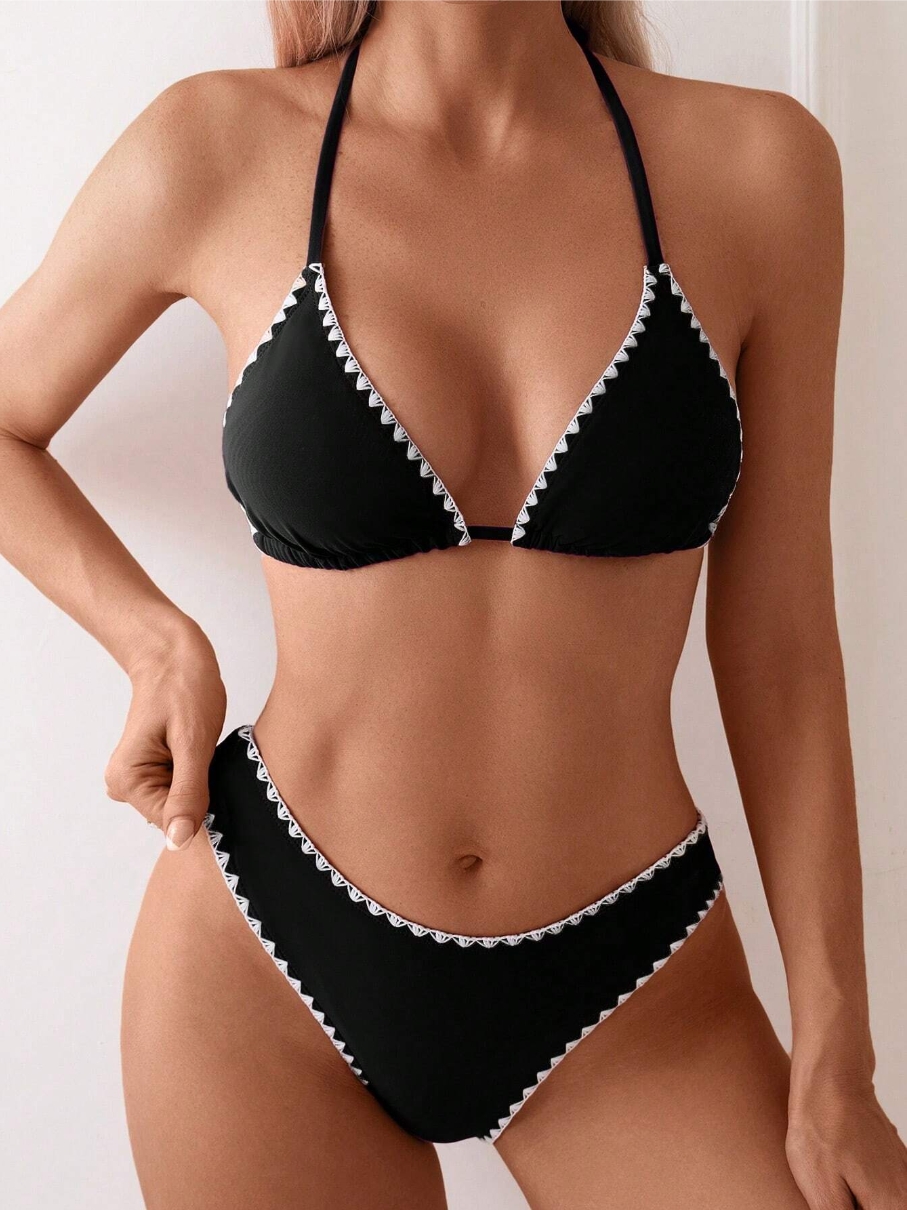
Many marketing campaigns sell highly subjective promises to consumers. They claim certain cuts provide instant slimming effects. We should shift our focus away from these unproven myths. Instead, we must look at structural garment mechanics. Visual proportions dictate how apparel actually fits your unique body.
Sizing granularity remains a major structural advantage for separated sets. You possess the ability to purchase tops and bottoms in completely different sizes. This comfortably accommodates non-standard body proportions. Someone possessing broad shoulders and narrow hips finds a perfect fit easily. You cannot do this easily using a continuous garment.
Customized Top Fit: Allows precision sizing for bust volume independent of waist size.
Customized Bottom Fit: Ensures proper coverage for hips without pulling the top downward.
Proportional Balance: Lets you mix high-waisted bottoms with minimal tops for visual symmetry.
We must also evaluate compression and core support objectively. Continuous garments utilize long fabric panels. They wrap around the torso to provide gentle core compression. They also lift and support the bust naturally through vertical tension. Conversely, separated tops rely entirely on isolated hardware. They use underwire, banding, and rigid strap tension to create adequate support.
Finally, consider how material limitations affect the overall fit. Different fabric blends behave uniquely under physical stress. A nylon and spandex blend stretches generously in multiple directions. However, it behaves differently when stretched across a single continuous piece. Tugging at the bottom pulls the top down simultaneously. Separate pieces eliminate this vertical tension transfer entirely.
Structural Feature | One-Piece Garment | Two-Piece Garment |
|---|---|---|
Sizing Approach | Universal size for entire body | Independent top and bottom sizing |
Core Compression | High (continuous fabric panels) | None (exposed midsection) |
Tension Distribution | Vertical pull from shoulders to hips | Isolated to chest band and waist band |
Bust Support | Relies on shoulder straps and fabric tension | Relies on underwire and ribcage banding |
We should assess the economic value of your aquatic wardrobe. The modularity advantage belongs exclusively to separated sets. You gain the incredible ability to mix and match individual tops and bottoms. Combining new pieces with existing sets creates multiple fresh looks. This strategy significantly extends your overall wardrobe lifecycle.
Continuous garments offer their own unique utility advantage. Modern designs frequently double as functional bodysuits for post-beach wear. You can easily layer them under denim shorts or flowing skirts. They transition seamlessly from the swimming pool to a casual lunch setting. This dual-purpose nature increases their overall daily value.
However, we must address fabric degradation realities honestly. Separated sets typically wear unevenly over time. The bottom degrades much faster from sitting on rough pool edges. Chlorine also affects the bottom fabric differently. Conversely, a continuous garment degrades as a single unified item. You must replace the entire piece once the elasticity fails.
Choosing the right garment requires a logical elimination process. You can follow these sequential steps to ensure a successful purchase.
Venue and Activity Audit: Determine your primary use case first. Are you surfing and swimming laps aggressively? Or are you passively lounging at a resort spa? Active uses demand continuous coverage, while passive uses favor modular sets.
Torso Measurement Verification: You must validate your torso length if leaning toward a continuous design. Check your measurements against specific brand sizing charts. This crucial step prevents severe fit failures and shoulder discomfort.
Support Requirements: Evaluate your structural needs honestly. Shoppers requiring D+ cup sizes should prioritize options containing structural hardware. Look for sturdy underwire and thick adjustable straps. You will find these features easier to custom-fit in separated tops.
Sun Exposure Tolerance: Map out your daily UV protection needs accurately. Consider the local climate and your expected duration of sun exposure. High exposure requires the continuous torso coverage of a unified piece.
Comparing a specific two-piece set to the entire aquatic apparel category creates unnecessary confusion. You are effectively comparing a specific tool to the entire toolbox. Understanding the precise definitions helps you navigate e-commerce stores efficiently. It allows you to filter products based on accurate structural mechanics.
We highly recommend basing your purchasing decision strictly on your primary environment. Avoid following fleeting trend cycles blindly. Evaluate your personal sizing modularity needs and activity impact levels. A well-chosen garment prevents discomfort and enhances your overall water experience.
Take time to audit your current wardrobe using the framework provided. We prompt you to explore categorized collections strategically. Shop athletic continuous pieces for active days. Alternatively, build your custom separated set for ultimate sizing precision.
A: Yes. "Bathing suit" is primarily a historical and regional term. People use it heavily in the US Northeast. It means the exact same thing as the broader category of aquatic apparel. There is no structural difference between the two terms.
A: Yes, but with strict caveats. Success requires choosing a highly sports-specific design. You need fixed cross-back straps and high-compression fabric. Avoid tie-closures completely. You cannot swim aggressive laps securely in a fashion-focused string design.
A: Retailers do this for user experience and conversion optimization. Shoppers looking for continuous pieces versus separated pieces have distinctly different purchasing intents. Separating them reduces friction in the buying journey. It helps you find exactly what you want faster.
A: Durability is dictated by the fabric composition, not the physical cut. High-polyester blends resist harsh chlorine best. However, separated components offer a unique replacement advantage. You can replace them individually if one specific piece degrades faster than the other.


