WELCOME TO VISIT OUR WEBSITE
English

Views: 0 Author: Site Editor Publish Time: 2026-07-31 Origin: Site


Producing high-quality embroidered swimwear requires balancing rigid thread structures with 4-way stretch fabrics. Misalignment here leads to seam puckering, thread snapping, and high return rates. Spandex blends expand dramatically when worn. Standard stitching cannot accommodate this aggressive expansion. This fundamental clash creates major manufacturing headaches.
For brands transitioning from print-on-demand to custom OEM, selecting a specialized partner is crucial. This choice determines product viability. It also secures long-term brand reputation. Poor stitching on intimate apparel ruins the consumer experience instantly. You need a factory capable of navigating these complex technical constraints.
This guide provides a technical and commercial framework for evaluating OEM partners. It covers managing the prototyping process effectively. It also outlines methods to mitigate the risks inherent in stretch-fabric embroidery. You will learn how to align stitch density, thread materials, and backing protocols for flawless production.
Embroidery on high-spandex blends requires specialized backing, dynamic tension control, and chlorine-resistant polyester threads to prevent structural failure.
Vetting manufacturers requires looking past basic product photos; brands must demand structural QA data, specifically stretch-recovery and colorfastness tests.
Strategic design placement—avoiding high-tension zones like deep necklines or low-back seams—drastically reduces prototyping costs and production lead times.
Understanding unit economics (stitch count vs. MOQ) is essential to avoid hidden commercial delays during mass production.
Nylon and spandex materials move dynamically in four directions. Embroidery threads remain entirely rigid. This contrast creates physical friction during manufacturing. When a sewing machine drives rigid thread through a stretchy base, tension builds. The fabric often warps. It pulls unnaturally around the stitch block. This phenomenon causes cupping. You end up with localized areas feeling stiff and uncomfortable. An experienced embroidered one-piece swimsuit manufacturer understands how to manage this structural conflict. They calibrate machines to isolate the embroidered zone carefully.
Thread selection mandates strict adherence to chemical resistance. Polyester threads are absolutely non-negotiable for swimwear. Standard apparel often uses rayon threads. Rayon offers a high sheen but degrades rapidly. Exposure to UV rays destroys rayon fibers. Chlorine weakens its tensile strength. Saltwater causes severe color fading. Polyester threads withstand these harsh environments seamlessly. They maintain structural integrity. They hold vibrant colors across multiple wash cycles. Using anything other than premium polyester guarantees product failure.
Stabilizers and backing protocols form the unseen foundation of good swimwear. Embroidery requires a backing material. This stabilizes the stretchy nylon during stitching. However, standard cut-away backings feel abrasive. They scratch bare skin. Swimwear acts as intimate apparel. Therefore, factories must utilize specialized stabilizers. Water-soluble stabilizers dissolve during the final wash process. This leaves a clean, flexible finish. Alternatively, factories use ultra-soft micro-mesh cut-away stabilizers. These secure the embroidery firmly. They also ensure the interior surface remains smooth against sensitive skin.
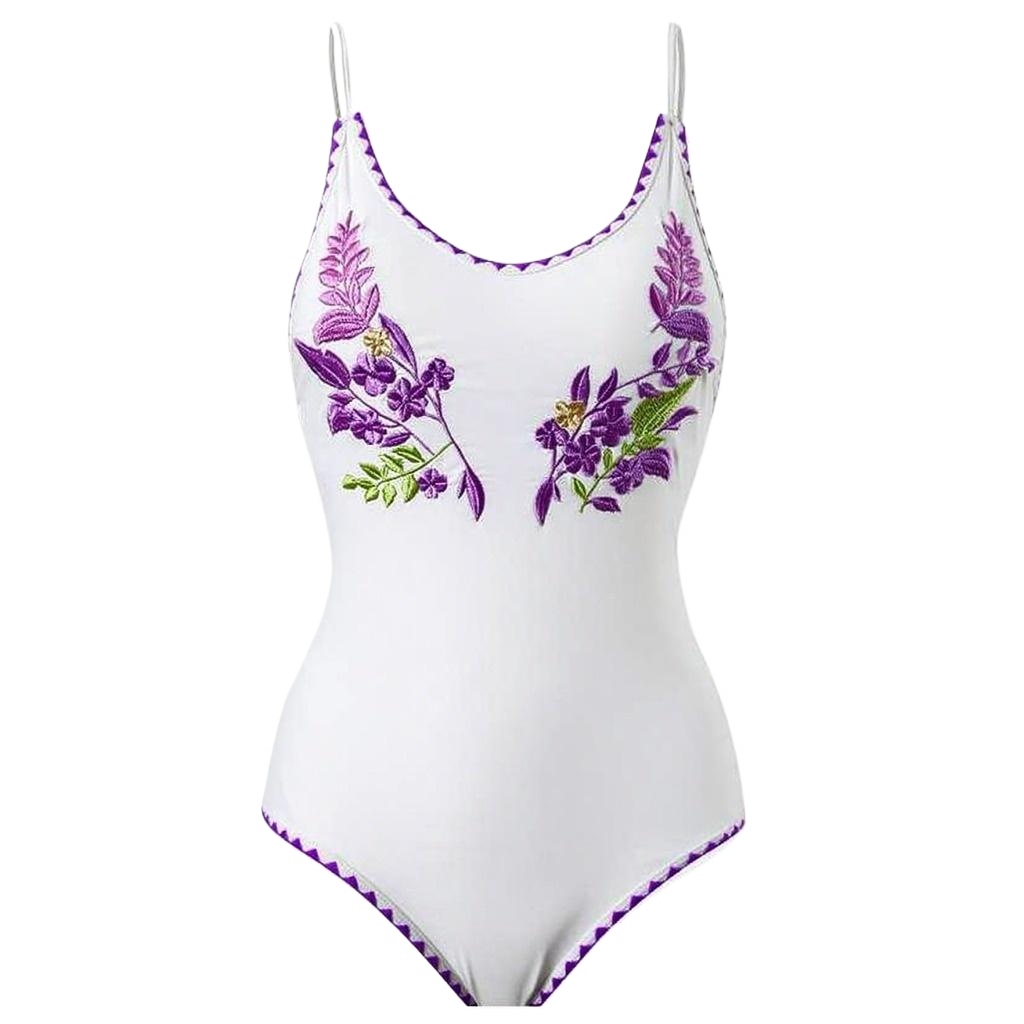
The manufacturing process begins by digitizing the tech pack. Factories must translate flat 2D vector art into precise stitch files. This requires meticulous stitch density calibration. Swimwear fabrics typically weigh between 180 and 220 GSM. A stitch count configured for heavy denim will ruin this lightweight fabric. The digitizer must reduce stitch density. They must program dynamic underlays. This maps how needles penetrate the fabric without causing micro-tears in the spandex fibers.
Brands must expect a rigorous sampling iteration loop. The first sample usually fails. Tension issues almost always emerge. The fabric might pucker slightly. To fix this, capable partners adjust specific machine variables. They implement a standard three-step iteration protocol:
Evaluate the bobbin tension to ensure under-threads are not pulling the top threads too tightly.
Swap standard sharp needles for specialized ballpoint needles. Ballpoint needles push spandex fibers apart instead of slicing them.
Adjust the machine hoop tension to prevent the base fabric from stretching prematurely before the needle strikes.
Fit testing requirements for stretch apparel are incredibly strict. You cannot evaluate embroidered prototypes on hard mannequins. Mannequins do not move. They do not simulate body contours. Embroidered prototypes must undergo fit testing on live human models. You must evaluate thread stress under maximum physical stretch. Models should twist and bend. This reveals hidden stress fractures. It exposes areas where the rigid embroidery restricts the garment’s natural stretch.
Different bathing suit cuts impact embroidery placement. Manufacturing complexity increases when designs intersect with high-tension seams. Proper placement minimizes thread snapping.
A scoop neck swimsuit presents unique structural zones. The ideal embroidery location is the central chest plate. This area experiences horizontal stretch but minimal vertical distortion. You must avoid embroidering too close to the neckline binding. Sewing heavy thread over bound elastic destroys its recovery memory. The neckline will warp. It loses its elasticity. The suit will sag during wear. Keep stitch blocks at least two inches away from primary elastic bindings.
Tension dynamics change drastically for a low back bathing suit. The absence of back fabric shifts tension to the shoulder straps and side panels. Placing embroidery on the rear waistline invites stress fractures. The fabric pulls aggressively across the hips. Strategic placement prevents this. Recommend side-panel embroidery. Upper-strap placements also work beautifully. These areas experience less multidirectional pull. This ensures the stitching remains intact when the wearer bends forward.
Applications on a monokini swimsuit introduce advanced complexities. These suits feature large cut-outs. The remaining fabric strips handle immense structural loads. Embroidering near cut-out seams is risky. It compromises the midriff connections. The needle perforations weaken the spandex. If you must place designs near cut-outs, reinforce the backing. Use a dual-layer mesh stabilizer. This distributes the physical load across a wider surface area. It maintains the garment's structural integrity.
Auditing a manufacturer's quality assurance process demands technical scrutiny. Do not rely solely on beautiful product photos. You must demand stretch and recovery testing data. The embroidered section must stretch cohesively with the garment. Once released, it must return to its baseline shape immediately. If the fabric bubbles or exhibits "cupping," the factory failed. This indicates improper hoop tension during the sewing phase.
Colorfastness and bleed risk pose massive threats. Bathing suits endure harsh chemicals. Heavily dyed embroidery threads can easily bleed into lighter base fabrics. This happens rapidly when exposed to chlorinated water and high heat. Factories must conduct rigorous lab tests. They submerge swatches in chlorinated solutions. They apply heat presses. Only threads passing level 4 or 5 colorfastness ratings belong in your supply chain.
Interior finish audits reveal a factory’s true specialty. Inspect the inside of the garment. Clean, soft interior thread finishes are mandatory. If you feel abrasive backings, walk away. Scratchy interiors indicate a factory accustomed to heavy outerwear. They do not understand intimate apparel. An expert factory finishes the inside as beautifully as the outside. They trim excess stabilizers perfectly.
Compliance and certifications validate material safety. Demand OEKO-TEX® Standard 100 certification. This globally recognized standard ensures products are harmless. It verifies that threads, backings, and base fabrics contain no toxic substances. Formaldehyde and heavy metals sometimes exist in cheap dyes. The OEKO-TEX® certification eliminates this risk completely.
QA Metric | Pass Criteria | Red Flags |
|---|---|---|
Stretch & Recovery | Returns to flat baseline instantly | Fabric cupping or puckering |
Colorfastness | No dye bleed in chlorine tests | Staining on lighter base fabrics |
Interior Finish | Soft, flush against the skin | Abrasive cut-away backing residue |
Compliance | OEKO-TEX® Standard 100 | Uncertified chemical dyes |
Commercial pricing relies heavily on stitch count logic. Larger, denser embroidery blocks exponentially increase machine time. Machine time dictates factory overhead. A small 5,000-stitch logo takes minutes. A 40,000-stitch floral panel takes an hour per piece. This directly inflates your per-unit cost. To optimize margins, simplify your vector files. Reduce solid fill areas. Use clever line-art designs instead. This drops the stitch count without sacrificing visual impact.
Minimum Order Quantities (MOQs) form another major hurdle. Transparent baseline expectations help you plan properly. Sourcing standard solid-color fabrics keeps MOQs manageable. However, custom elements change everything. If you require custom dyed embroidery threads, factories enforce higher minimums. Specialized spandex blends also push MOQs higher. Expect standard requirements around 300 to 500 units per style. You cannot treat an embroidered one-piece swimsuit like a basic cotton t-shirt.
Lead time forecasting requires realistic timelines. Custom OEM production moves slowly. Factories need 3 to 4 weeks just for the sampling phase. Iterations consume time. Once you approve the final sample, mass production begins. Expect another 6 to 8 weeks for final assembly. Complex machine setup times factor heavily into this. Workers must program multi-head machines. They must align hoops perfectly for womens swimwear panels. Rush orders usually result in skipped tension checks.
Successful OEM production relies entirely on technical mastery. Your partner must control tension perfectly. They must source highly specialized materials. Blending rigid thread with 4-way stretch fabric is objectively difficult. It requires patience and specialized machinery.
We advise B2B buyers to request specific stretch-test samples first. Ask prospective factories for a physical swatch before paying for custom digitizing. Evaluate their baseline capabilities. Stretch the swatch aggressively. Wash it. Observe how the threads react.
Your next step involves documentation. Prepare a highly detailed tech pack. Include exact stitch dimensions. Specify exact placement measurements. State your thread material requirements clearly. A precise tech pack secures accurate OEM quotes. It establishes an authoritative standard for your production run.
A: Embroidery creates a localized non-stretch zone. Threads lock the spandex fibers together. Placement must be strategic. Excellent placements include the center chest or upper hip. This avoids restricting the garment's overall 4-way stretch capability during movement.
A: While possible, metallic threads pose significant risks. They are highly abrasive against skin. They also tarnish quickly in saltwater and chlorine. They require specialized polymer coatings. Factories must also apply thick inner linings to make them viable for swimwear.
A: Acceptable commercial tolerance falls under 3%. High-quality factories use pre-shrunk polyester threads. They apply proper hoop tensioning during manufacturing. These practices minimize fabric puckering post-wash, ensuring the design remains flat.
A: Puckering stems from mechanical errors. Incorrect stabilizer use is the primary culprit. Excessive stitch density also traps the fabric. Finally, inadequate hoop tension allows the high-spandex fabric to shift during the machine embroidery process.


