WELCOME TO VISIT OUR WEBSITE
English

Views: 0 Author: Site Editor Publish Time: 2026-07-29 Origin: Site


High-waisted activewear dominates modern athletic fashion. Consumers love the supportive silhouette. However, poorly constructed waistbands remain the leading cause of customer returns. Rolling, pinching, or losing elasticity quickly destroys brand loyalty. Activewear brands scaling production face a distinct challenge today. They need a high-waisted yoga pants manufacturer going beyond basic cut-and-sew operations. Success requires advanced technical fabric sourcing. It demands precise compression grading and consistent quality control. Choosing the right partner separates industry leaders from struggling brands.
Evaluating an OEM partner requires looking past bold marketing claims. You must audit their technical capabilities thoroughly. Dig into their prototyping processes. Review their quality assurance frameworks before committing to bulk production runs. This comprehensive guide reveals how to identify reliable manufacturing partners for your activewear line.
A reliable high-waisted yoga pants manufacturer must demonstrate expertise in stretch recovery and tension distribution to prevent waistband roll-down.
Evaluating OEM partners should prioritize fabric tech (moisture-wicking, squat-proof opacity) alongside realistic MOQs and lead times.
Transparent prototyping and stringent QA protocols (e.g., wash testing, stretch tolerance) are critical to mitigating supply chain risks.
Successful OEM yoga apparel partnerships rely on clear tech packs and aligned compliance standards before bulk production begins.
Modern consumers expect activewear to perform flawlessly. They demand strict compression around the core. Yet, they refuse to tolerate any feeling of restriction. Standard apparel factories often fail to balance these competing needs. Traditional pants rely on rigid structures. Activewear relies entirely on fabric tension and strategic paneling. Standard factories often apply basic linear grading rules. They simply scale patterns up or down evenly. Activewear requires contoured grading. Different sizes need different tension distributions. Without specialized grading, a size large might fit the hips but gap loosely at the waist. You need specialized engineers to solve these complex geometry problems.
Sheer fabric destroys brand reputation instantly. Customers test garments rigorously during workouts. Any transparency during deep bending movements leads to immediate returns. Achieving true squat-proof opacity requires deep technical knowledge. You must mandate strict GSM (grams per square meter) consistency. Premium high-waisted yoga pants typically utilize 220 to 280 GSM fabrics. However, weight alone cannot solve the problem. Yarn choices matter significantly. Double-knit interlock construction prevents light from penetrating the material. Specialized partners understand how to blend dense nylon yarns. They prevent sheer spots without making the garment feel suffocatingly heavy.
The waistband serves as the structural anchor of the entire garment. Poor engineering causes immediate roll-down during exercise. Traditional elastic bands fail frequently in athletic wear. They twist inside the fabric casing. They snap over time. Advanced structural requirements dictate better solutions. Continuous drawcords provide adjustable security. Bonded seams reduce bulk around the sensitive stomach area. Elastane ratios play a crucial role here. A premium waistband often requires 15% to 25% spandex. This ensures aggressive shape retention over hundreds of wash cycles. High-quality manufacturers use graduated compression zones. They place tighter tension at the top edge. They ease the tension near the hips. This sophisticated approach prevents the dreaded "muffin top" effect.
Specify double-knit interlock fabrics in your tech packs.
Demand contoured size grading rather than simple linear scaling.
Utilize bonded seams in the waistband to minimize skin irritation.
Relying solely on heavy GSM instead of dense yarn construction.
Using traditional flat elastic bands inside the waist casing.
Failing to test tension distribution across a full size run.
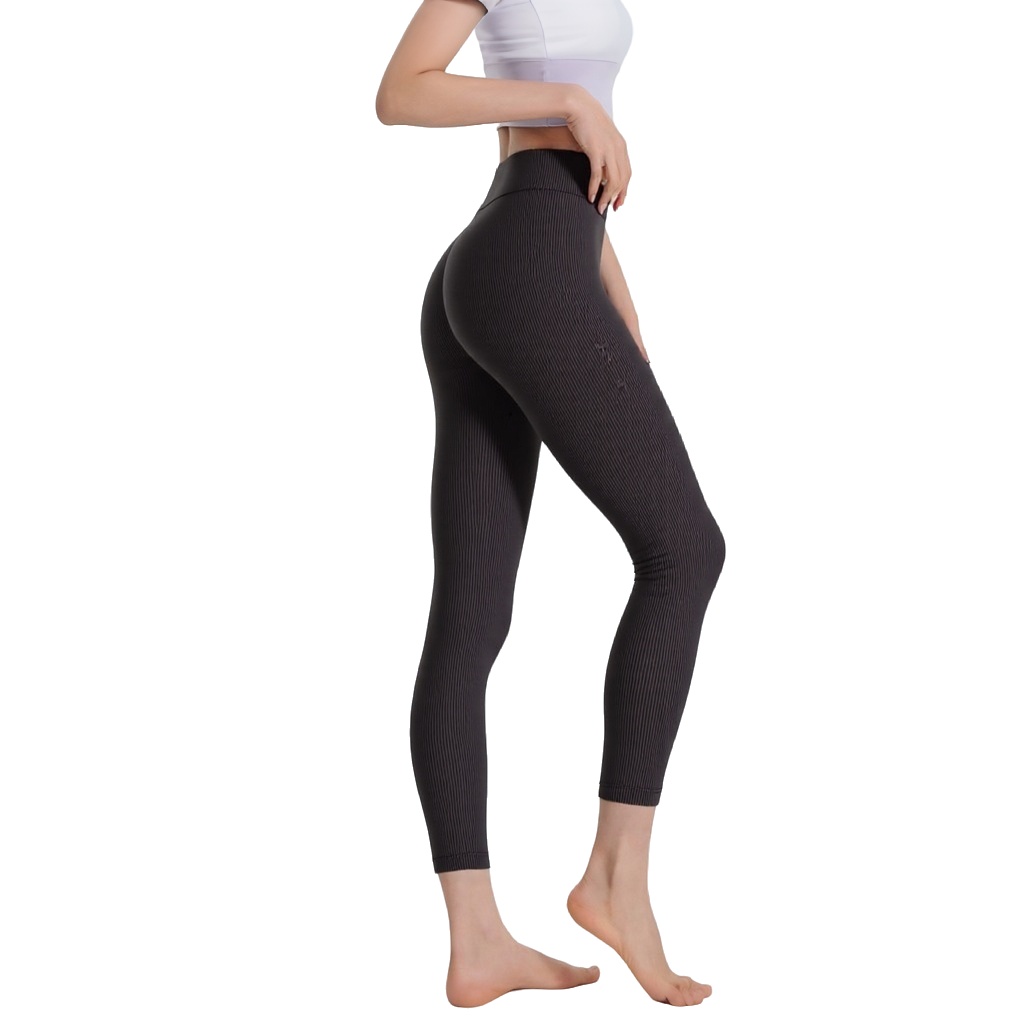
Your manufacturer must possess direct access to premium performance textiles. Ask detailed questions about their supply chain network. You need proven capability in producing true four-way stretch pants. Two-way stretch fabrics restrict movement severely. They feel rigid during lateral exercises. Prioritize high-recovery spandex and nylon blends. Nylon offers superior durability and a softer hand-feel compared to cheap polyester. Superior recovery prevents bagging at the knees after extended wear.
Furthermore, gym environments demand advanced chemical treatments. Seek partners excelling in moisture-wicking yoga wear. Cheap surface treatments wash away quickly. Premium factories utilize yarn-level capillary actions. They draw sweat away from the skin permanently. Anti-microbial finishes prevent odor buildup. Colorfastness remains absolutely vital. High-sweat environments cause cheap dyes to bleed onto skin or other garments.
Activewear construction requires specialized sewing machinery. Standard lockstitch machines fail under extreme tension. Look for factories operating advanced flatlock stitching equipment. Flatlock seams lay completely flush against the skin. They eliminate chafing during repetitive movements. Seamless knitting technology offers another premium option. It removes bulky side seams entirely. Additionally, examine their approach to crotch gussets. Reinforced diamond or triangle gussets represent non-negotiable features. They distribute stress away from central seam intersections. This prevents catastrophic seam failure during intense workouts.
A reliable partner translates complex ideas into physical products seamlessly. They take your brand-specific tech packs. They turn them into scalable production runs. Assess their customization capabilities thoroughly. Private labeling builds your unique brand identity. Custom pantone dyeing ensures color consistency across different fabric batches. Localized heat-transfer logos replace itchy woven tags. Excellent factories manage these details without compromising production speed.
Capability Criterion | Standard Apparel Factory | Premium OEM Activewear Partner |
|---|---|---|
Fabric Stretch Capability | Two-way stretch, basic polyester blends | True four-way stretch, high-recovery nylon/spandex |
Seam Construction | Overlock stitching, raised seams | Flatlock stitching, seamless knitting, bonded edges |
Crotch Architecture | Standard 4-way cross seam | Reinforced diamond or triangle gussets |
Moisture Management | Temporary topical surface treatments | Permanent yarn-level capillary wicking technology |
Prototyping dictates the ultimate success of your product line. Never rush this critical phase. A standard sampling process involves several distinct stages. First, you receive a fit sample. This verifies the basic pattern and design lines. Next, you order a size set. This proves the grading works across small, medium, and large bodies. Finally, you approve the pre-production sample (PPS). The PPS uses the exact bulk fabric and final trims. Multiple iterations remain entirely normal. You must perfect the high-waist fit across a full size run. Testing on physical fit models reveals flaws missed on mannequins.
Initial Pattern Draft: Translating the 2D tech pack into a 3D garment.
First Fit Sample: Evaluating general silhouette and seam placement.
Wear Testing: Having athletes perform dynamic movements in the prototype.
Size Set Approval: Checking tension and fit across extreme ends of the size chart.
Pre-Production Sample: Final sign-off before raw materials get cut.
Understanding MOQs prevents early budget exhaustion. Factories structure minimums based on raw material constraints. Custom milled fabrics require high baselines. Expect minimums exceeding 1,000 pieces per style for unique blends. Dye houses dictate these large volumes. Conversely, utilizing in-stock fabrics lowers your risk. In-stock options often allow MOQs between 100 and 300 pieces per color. Smart brands negotiate pilot runs first. They test market viability with stock fabrics. Once a specific style of athletic leggings proves successful, they scale up to custom dyed materials.
Unrealistic timelines ruin marketing launches. You must build buffer weeks into your schedule. Typical timelines span several months from tech pack approval to bulk delivery. Prototyping alone often consumes four to six weeks. Fabric milling and dyeing add another four weeks. Cut, sew, and trim processes take roughly thirty days. Finally, shipping adds variable delays. Common bottlenecks include custom dye lab dips and specific trim sourcing. A mature supply chain anticipates these exact hurdles. They pre-order long-lead items immediately upon PPS approval.
Production Phase | Estimated Duration | Common Bottlenecks to Monitor |
|---|---|---|
Pattern Making & Fit Samples | 2 to 4 Weeks | Multiple fit revisions, unclear tech packs |
Fabric Milling & Custom Dyeing | 3 to 5 Weeks | Lab dip rejections, yarn shortages |
Bulk Cutting and Sewing | 4 to 6 Weeks | Factory peak seasons, machine maintenance |
Quality Control & Packing | 1 to 2 Weeks | High defect rates requiring rework |
Quality control requires objective measurement. Subjective opinions cause endless factory disputes. Define clear acceptable quality limits (AQL) in your manufacturing agreement. The activewear industry typically utilizes AQL 2.5 for major defects. This standard dictates exactly how many flawed garments trigger a full batch rejection. Document every tolerance clearly. Specify acceptable variance for waistband width. Define exactly how many millimeters a seam can deviate. Clear documentation protects your financial investment.
A credible factory performs scientific stress tests constantly. They do not rely on visual inspections alone. Demand specific testing protocols. Stretch-and-recovery testing measures elasticity degradation. Technicians stretch the fabric repeatedly to simulate gym usage. They measure how quickly it snaps back to its original dimension. Pilling resistance undergoes the Martindale test. Machines rub abrasive pads against the fabric thousands of times. Shrinkage tolerances require strict monitoring. High-waisted designs lose their core support if they shrink unevenly after multiple hot washes.
Consumers care deeply about supply chain ethics. Factory certifications represent vital brand-protection measures. They are not merely moral imperatives. Look for WRAP (Worldwide Responsible Accredited Production) certification. It ensures fair labor practices and safe working conditions. OEKO-TEX Standard 100 guarantees chemical safety. It proves the garments contain no harmful substances against the skin. BSCI compliance indicates strong social responsibility. Ignoring these certifications invites PR crises. Furthermore, customs officials frequently delay shipments from uncertified facilities. Compliance ensures smooth border transitions.
Hire third-party QA inspectors for your first bulk shipment.
Request physical copies of OEKO-TEX and WRAP certificates annually.
Include exact stretch-and-recovery percentages in your tech pack.
Approving bulk production without defining an exact AQL standard.
Skipping wash-testing on the final pre-production sample.
Assuming all factory certifications remain currently valid without verification.
Initial outreach sets the tone for your entire relationship. A vague inquiry yields a vague price. Professional RFQs demand respect from top-tier factories. Include comprehensive tech packs immediately. Provide detailed flat sketches and measurement charts. State your target cost-to-produce clearly. Transparency saves time for everyone. Detail your projected annual volume. A factory treats a client projecting ten thousand units differently than one projecting five hundred. Give them a reason to invest engineering time into your brand.
Not every manufacturer deserves your trust. Protect yourself by recognizing early warning signs. Walk away if you encounter these specific behaviors during negotiation:
Promising zero-defect rates: Textile manufacturing involves human hands. Zero defects remain physically impossible. Honest factories discuss their AQL limits openly.
Guaranteeing impossibly short lead times: Quality activewear takes time. Anyone promising bulk delivery in three weeks is cutting critical QA steps.
Lacking physical samples: A premier factory proudly displays past complex high-waisted work. Refusal to send a stock sample indicates poor capabilities.
Bypassing fit samples: Rushing straight to bulk production guarantees a disastrous sizing run.
Transition from research to direct action. Identify three potential manufacturing partners today. Request a capability deck from each facility. Order an existing stock sample to evaluate their seam quality physically. Schedule a technical review of your design files. Discuss your specific waistband requirements directly with their pattern maker. Strong communication during this phase prevents expensive mistakes later.
Transitioning to a specialized manufacturer protects your brand equity fiercely. Mastering the high-waisted silhouette requires complex engineering. By prioritizing superior stretch recovery, strict QA protocols, and ethical compliance, you eliminate the leading causes of customer frustration. Reducing return rates directly increases your customer lifetime value. Satisfied athletes become vocal brand advocates.
Remember, the right OEM partner functions as an extension of your product development team. They act as strategic advisors, not just nameless vendors. They anticipate bottlenecks and offer innovative material solutions before problems arise. Treat the sourcing process with the gravity it deserves.
Stop losing customers to rolling waistbands and sheer fabrics. Submit your tech pack for a comprehensive feasibility review today. Contact an experienced technical team for a material sourcing consultation. Building premium oem yoga apparel starts with choosing the right foundation.
A: Stock fabrics offer lower MOQs, typically 100 to 300 pieces per color. Custom milled fabrics require higher minimums. Expect 1,000 or more pieces per style. Custom dyeing and specialized yarn blending drive this requirement. Start with stock fabrics to test the market first.
A: Premium manufacturers use double-knit fabrics. They select appropriate weights, typically between 220 and 280 GSM. Quality control teams perform rigorous tension testing. They stretch the fabric over contrasting surfaces. This ensures full opacity during deep bending movements. Yarn density matters more than simple thickness.
A: OEM and ODM differ significantly. OEM means you provide the complete tech pack. The manufacturer simply produces your exact design. ODM means the manufacturer provides existing white-label designs. You can modify colors, logos, and minor details. Choose ODM if you lack technical design resources.
A: Expect two to four weeks for your initial first-fit sample. This timeline includes basic pattern making. Fabric availability heavily impacts speed. Custom colors add significant time. Success requires patience during this phase. Multiple iterations ensure a perfect high-waist fit before bulk production begins.


