WELCOME TO VISIT OUR WEBSITE
English

Views: 0 Author: Site Editor Publish Time: 2026-09-22 Origin: Site


Whether designing a summer retail collection or upgrading corporate uniforms, buyers face a common challenge. You must balance breathability against a clean, professional aesthetic. A tailored or semi-tailored garment ending above the elbow perfectly defines this essential piece. It expertly bridges the gap between crucial ventilation and structured style.
While ubiquitous, poorly constructed versions often suffer from severe proportion issues. Unflattering sleeve flaring ruins the entire silhouette. Furthermore, sub-optimal fabric choices degrade rapidly under heavy daily use. They lose shape after just a few wash cycles. This degradation costs brands customer loyalty and inflates corporate replacement budgets. You need reliable criteria to avoid these common manufacturing pitfalls.
This guide gives buyers, brand developers, and bulk procurers an objective framework. You will learn how to evaluate construction quality rigorously. We will show you how to specify materials accurately. Finally, you will discover the exact steps for selecting the right manufacturing partners. You can confidently build a superior product line using these standards.
Fit & Anatomy: High-quality short-sleeved shirts require specific pattern grading; simply cutting the sleeves off a long-sleeve pattern results in structural defects.
Fabric Dictates Function: A standard cotton short sleeve shirt prioritizes breathability, while a performance short sleeve shirt is engineered for moisture management and structural retention.
Style Mapping: Collar types (camp, button-down, spread) directly dictate the garment's acceptable use case, from casual retail to corporate uniforms.
Vendor Evaluation: Choosing a reliable short sleeve shirt supplier or manufacturer requires vetting their sample accuracy, MOQ flexibility, and quality control (QC) protocols.
When consumers ask what is a short-sleeved shirt fundamentally, they often overlook the engineering behind it. It is never just a standard shirt missing its lower sleeves. High-quality production requires precise geometric grading. Let us explore the baseline quality markers.
A perfect sleeve terminates right at the mid-bicep. Many poorly designed shirts feature a wide, untapered opening. This creates an unflattering "winged" effect around the arm. We always recommend applying a slight taper to the pattern. It hugs the bicep closely. You gain a structured, athletic silhouette immediately.
Pattern makers call the angle of attachment the sleeve pitch. Incorrect pitch causes twisting. You will see diagonal drag lines across the shoulder. A correct pitch aligns perfectly naturally. It follows the natural forward curve of the human arm. Always check the pitch during your initial sample review.
The armhole depth dictates everyday comfort and physical movement. A higher armhole provides a vastly superior range of motion. Lower armholes pull the entire body of the shirt upward. You experience this when lifting your arms overhead. It looks unprofessional and feels restrictive.
Brands must specify a higher scye in their technical designs. It keeps the torso fabric neatly in place. It also prevents excessive fabric bunching under the armpit. Best practice dictates keeping the armhole as small as comfortably possible. This small detail elevates a cheap garment into a premium offering.
Warm weather demands breathable, non-irritating interior seams. Overlocked seams remain the industry standard for fast fashion. They are cheap and incredibly quick to produce. However, they leave exposed threads. These threads often irritate bare skin during humid conditions.
French seams offer superior durability and ultimate comfort. They enclose the raw fabric edges completely within the seam itself. This technique prevents chafing against the skin entirely. You will notice the premium difference during intense summer heat. Uniform buyers should mandate flat-felled or French seams. They survive harsh industrial laundering far better than overlocked alternatives.
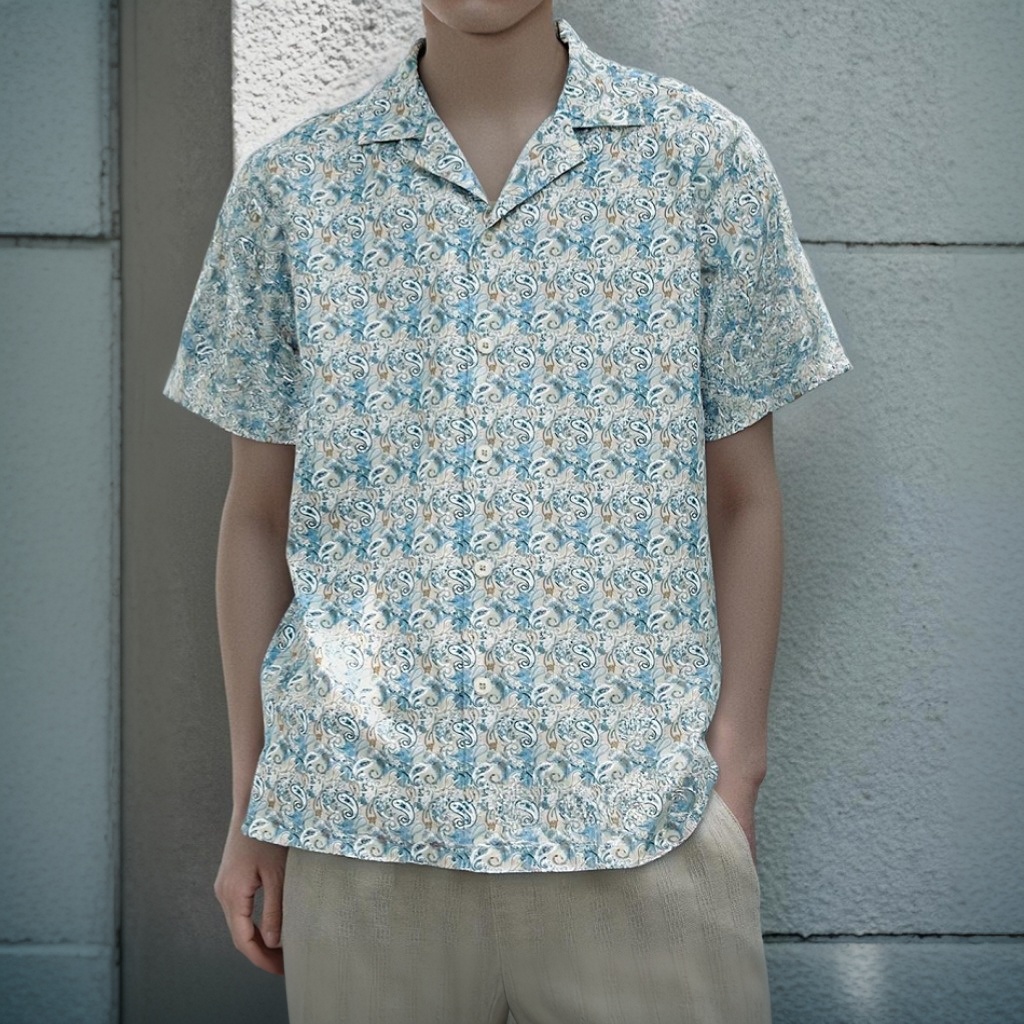
Styles dictate the appropriate end-use case directly. You must map your silhouette to your exact target audience. A mismatch here guarantees poor sales or uniform non-compliance.
The Cuban collar features an open, unstructured neckline. It lacks a top collar stand entirely. The fabric lies flat against the upper chest. You will find this style dominating modern resort wear. Casual retail lines rely heavily on this breezy aesthetic.
Relaxed hospitality uniforms also use this silhouette frequently. It exudes a relaxed, vintage charm. We advise pairing it exclusively alongside breathable natural fibers. Rayon, Tencel, and light cotton work best. Do not use stiff, heavy fabrics here. They ruin the intended soft drape of the collar.
This approach offers a structured, highly traditional look. Small buttons anchor the collar points directly to the shirt body. It bridges the gap between casual ease and formal structure perfectly. Corporate procurement teams often choose this specific style.
It works seamlessly inside smart-casual office environments. You project professionalism while maintaining essential summer comfort. The collar stays upright even under a tailored jacket. We recommend specifying a lightly fused interlining. It prevents the collar points from curling after repeated washing. Common mistakes include using thick, rigid interlinings. These look out of place on a summer garment.
Pop-over shirts utilize a distinct half-placket design. They slip over the head easily rather than buttoning completely down. This hybrid bridges traditional woven shirting and casual knitwear beautifully. They offer the clean, tailored look of a standard button-up.
Yet, they provide the relaxed ease of a weekend polo. Modern lifestyle brands use pop-overs to diversify their product lines effectively. They appeal to consumers seeking elevated loungewear. Ensure the placket extends deep enough. A shallow placket makes putting the shirt on extremely difficult. Aim for a three or four-button placket depth for optimal functionality.
Choosing the right fabric ensures garment longevity and wearer comfort. We categorize these essential materials into natural and engineered fibers. Each serves a highly specific operational purpose.
A high-quality cotton short sleeve shirt remains a mandatory wardrobe staple. It boasts a superior hand-feel. Natural breathability keeps the wearer cool during peak temperatures. It is naturally hypoallergenic and highly absorbent.
When evaluating sourcing options, look for long-staple varieties. Pima and Egyptian cotton resist surface pilling effectively. You must also verify pre-shrinkage treatments rigorously. Untreated cotton warps heavily after the very first wash cycle. Always request fabric test reports before bulk ordering. Check the colorfastness rating specifically. Darker cotton dyes tend to bleed if improperly finished at the mill.
Active environments demand modern, engineered solutions. A performance short sleeve shirt utilizes advanced mechanical stretch. Polyester and spandex blends offer excellent moisture-wicking properties. They pull sweat away from the body efficiently. They also resist daily wrinkles naturally.
Assess the grams per square meter (GSM) carefully. You want adequate visual opacity. However, you cannot sacrifice critical heat dissipation. A lightweight range of 100-140 GSM ensures maximum airflow. Watch out for cheap elastane. Low-quality spandex degrades quickly under high heat. It leaves the shirt permanently stretched out. Specify branded performance fibers for uniform programs requiring extreme durability.
Linen offers unmatched textural benefits for summer climates. Its open weave allows maximum air circulation across the torso. However, pure linen wrinkles almost instantly upon wearing. You must weigh this high-wrinkle reality against its immense cooling benefits.
Maintenance costs are inherently higher for consumers. They require frequent steaming or ironing. We often recommend clever cotton-linen blends instead. A 55% linen and 45% cotton mix works beautifully. They balance crisp visual texture with vastly improved structural stability. This blend reduces manufacturing costs while broadening consumer appeal.
Table 1: Fabric Selection Matrix for Summer Shirting
Fabric Type | Primary Strength | Drawback / Risk | Ideal Use Case |
|---|---|---|---|
100% Long-Staple Cotton | Superior breathability and soft hand-feel | Prone to minor shrinkage if untreated | Premium casual retail, everyday office wear |
Poly/Spandex Performance | Moisture-wicking, wrinkle-resistant stretch | Can trap odors if lacking anti-microbial finish | Active hospitality roles, outdoor uniforms |
Pure Linen | Maximum airflow and distinct visual texture | High wrinkle propensity, requires ironing | Resort collections, high-end vacation wear |
Cotton-Linen Blend | Balanced texture and reduced wrinkling | Slightly heavier than pure linen | Smart-casual weekend wear, spring collections |
Developing a proprietary clothing line carries distinct operational challenges. You must navigate scale, strict customization rules, and brand reputation risks.
Buying pre-made blanks offers very low upfront costs. It allows immediate speed to market. However, you sacrifice crucial brand differentiation. The fit remains generic. Developing custom short sleeve shirts allows complete creative control. You can specify exact body fits for private labeling.
Bespoke tailoring programs benefit immensely from custom block patterns. Uniform programs ensure exact brand color consistency across all sizes. You must weigh the higher initial investment against long-term brand equity. Custom manufacturing builds a protective moat around your specific product offering. Competitors cannot replicate your exact fit easily.
Accurate tech packs prevent incredibly costly production errors. A tech pack serves as the ultimate factory blueprint. You must include these essential components:
Dimensional Tolerances: Specify acceptable measurement deviations (usually +/- 0.5 inches).
Hardware Specifications: Detail button sizes (Ligne), materials, and exact placket widths clearly.
Fabric Compositions: List precise fiber percentages and required GSM weights.
Stitch Density: Mandate the exact Stitches Per Inch (SPI), typically 14-16 for premium goods.
A vague tech pack guarantees a flawed initial sample. We strongly recommend working alongside experienced technical designers. They translate your creative vision into precise, factory-ready instructions.
Modern consumers demand verifiable sustainable practices. Ensure your selected dyes meet strict global industry standards. OEKO-TEX Standard 100 certification proves your garments lack harmful chemical residues. This essential step builds crucial brand credibility.
Sustainable finishes protect factory workers and your end-users alike. Insist on AZO-free dyes during the fabric milling stage. Do not cut corners on environmental compliance. It protects your brand reputation fiercely in a highly scrutinized market. Many corporate procurement contracts now legally require these specific sustainability certifications before signing.
Choosing a reliable B2B production partner requires rigorous vetting. You need a trusted facility capable of meeting your exact standards. This decision impacts your entire supply chain stability.
You must weigh geographic trade-offs carefully. Domestic factories offer much shorter lead times. Communication happens seamlessly in your native timezone. However, unit economics are substantially higher. An overseas short sleeve shirt supplier provides highly cost-effective scaling.
Yet, you face potential language communication barriers. Global shipping logistics also add several weeks to your delivery timeline. Assess your internal cash flow and inventory runway before deciding. Brands needing rapid replenishment often choose domestic. Brands building large seasonal collections generally lean toward overseas production for better margins.
Never skip the crucial pre-production sample stage. It serves as your binding physical contract. Test the received sample for shrinkage immediately. Wash and dry it three times consecutively. Check colorfastness under various standard washing conditions.
Inspect the stitch density closely using a magnifying glass. High-quality shirts feature significantly more stitches per inch. Examine the buttonholes for loose, fraying threads. If the sample fails any baseline test, do not approve bulk production. Require the short sleeve shirt manufacturer to submit a revised sample. Approving a flawed sample legally binds you to accept flawed bulk goods.
Align the factory's Minimum Order Quantity (MOQ) with your realistic capacity. High MOQs tie up essential operating cash flow. They also create dangerous inventory bloat if styles underperform. Negotiate realistic, lower MOQs for your initial pilot runs.
Many modern factories offer scalable pricing tiers. You might pay a slight premium for lower quantities initially. As your brand grows, your unit costs will decrease naturally through larger volumes. Ask potential partners about their maximum monthly capacity. You need assurance they can handle your future growth gracefully. A good partner scales up without sacrificing their established quality control.
Investing in short-sleeved shirts requires looking far past surface aesthetics. Whether building a summer retail collection or outfitting a corporate fleet, structural integrity matters most. Proper grading, precise sleeve pitch, and robust seam construction separate premium garments from disposable fast fashion. These hidden details define the wearer's daily experience.
We highly recommend prioritizing sleeve proportion and fabric end-use alignment early. Finalize these elements long before engaging any manufacturer for bulk production. A well-constructed tech pack serves as your best defense against costly manufacturing errors. Demand strict quality control protocols from your chosen supply partners.
Take proactive steps today to elevate your garment procurement strategy. Request a detailed fabric swatch kit from potential suppliers. Download an industry-standard tech-pack template to organize your specifications. If you face complex scaling challenges, contact a dedicated sourcing specialist immediately to audit your current supply chain.
A: Generally, no for traditional worsted wool suits. The missing sleeve cuff looks visually unbalanced against formal jacket sleeves. However, it is highly acceptable with casual, unstructured linen or cotton suits. This works well in specific tropical or summer climates, provided you maintain a smart-casual aesthetic.
A: Polos are typically made from stretchy knit fabrics (like pique cotton). They feature soft, unfused collars and short half-plackets. Short-sleeved shirts utilize rigid woven fabrics. They incorporate structured collars and feature full-length button plackets running down the entire front of the garment.
A: Costs vary wildly based on precise variables. Fabric choice, order volume (MOQ), and construction complexity drive the price. A basic cotton blend overseas might cost $8-$15 per unit at scale. Premium fabrics with custom detailing and lower volumes easily push costs between $25-$45 per unit.
A: You should target a quantifiable range between 100 and 140 GSM (grams per square meter). This specific weight correctly balances essential breathability with required durability. It remains light enough to dissipate body heat but heavy enough to prevent unwanted fabric transparency.


